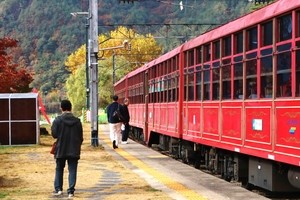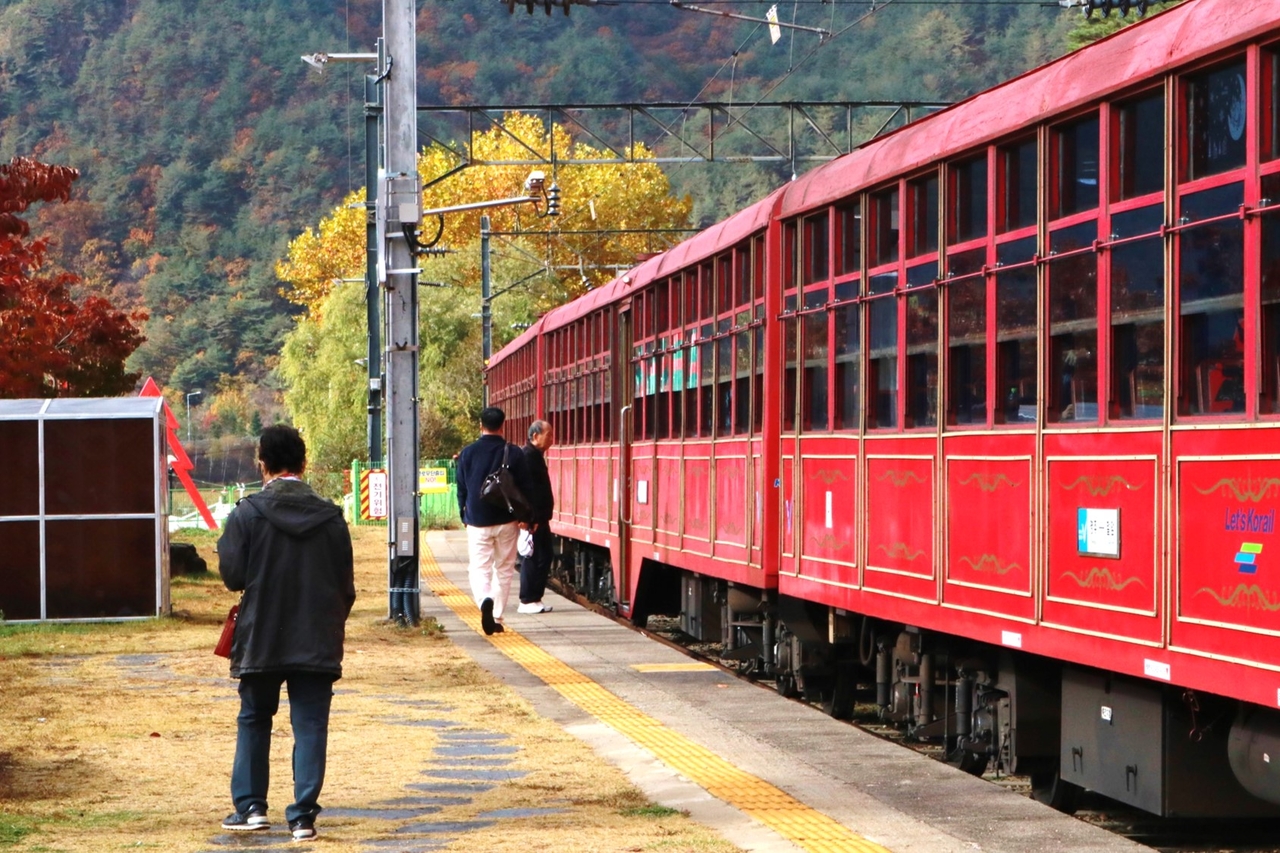
Forget the KTX. The high-speed train is a fast way to get around the country, but there are other, more scenic rail options that let passengers fully take in their surroundings.
The beauty of these sightseeing trains comes from their slowness. While the KTX takes you across the country at break-neck speed, the V-train winds through the mountains at speeds as low as 20 kilometers per hour.
Other trains take passengers along the coast, giving travelers more options to enjoy autumn colors as the air turns crisp.
The scenic route
The diesel-powered V-train takes travelers from Yeongju, North Gyeongsang Province, to Cheoram Station in Taebaek, Gangwon Province, along an 87-kilometer route that meanders up and down slopes and curves through valleys over the course of 2 1/2 hours.
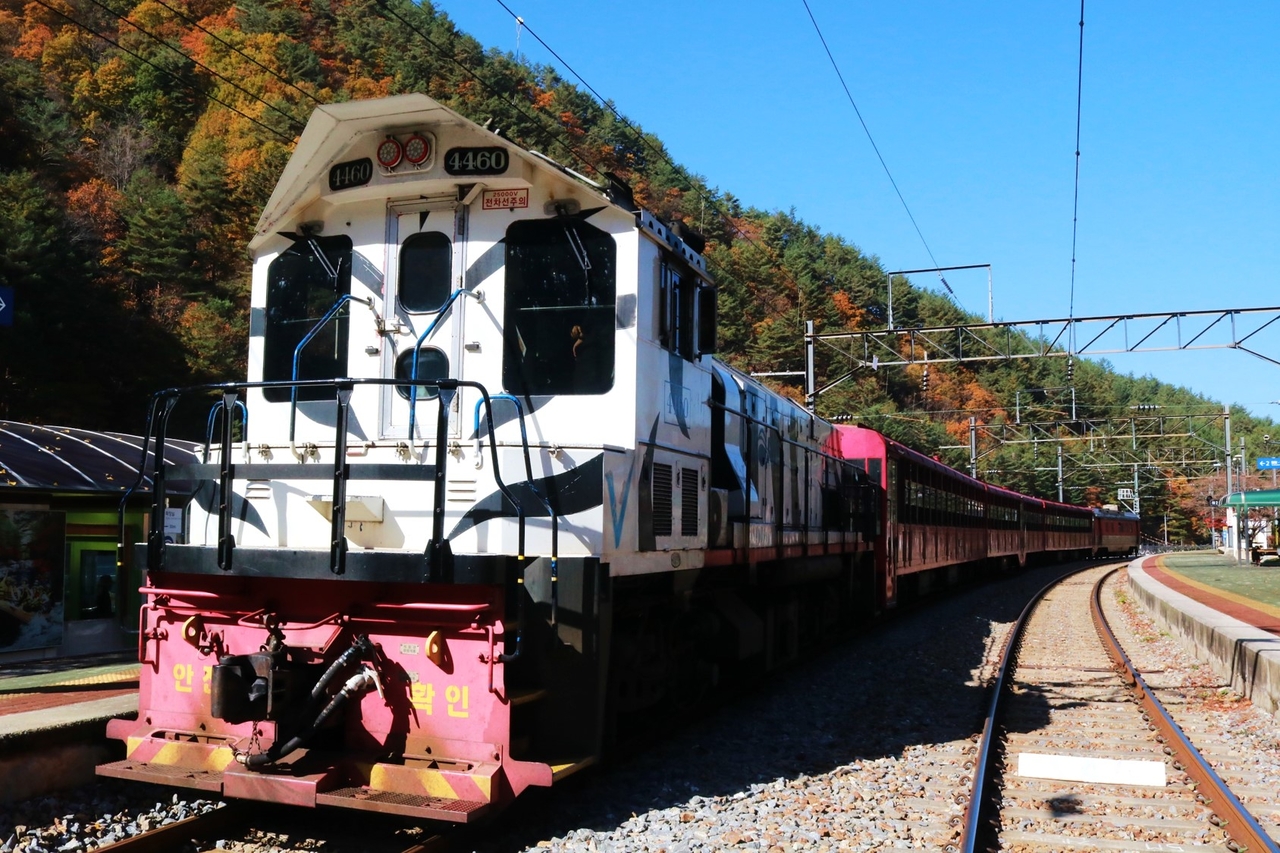
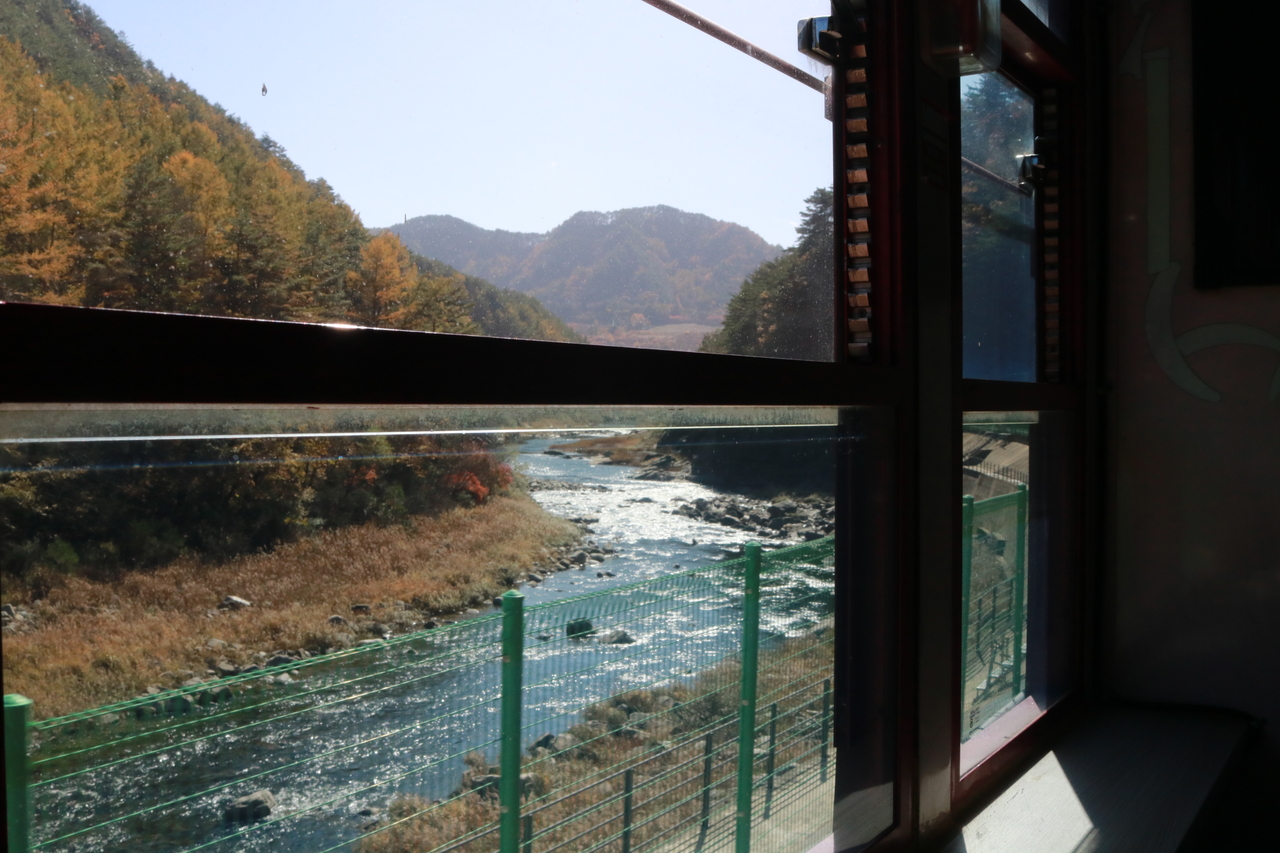
The Taebaek Mountains form part of a rugged spine down the eastern side of the Korean Peninsula that is known for its picturesque views, and some of the V-train's 160 seats face outward toward large windows. At times, the train slows down to a crawl, giving passengers a chance to completely soak in the scenic valleys, creeks, granite cliffs and hilly farms.
The V-train is locally dubbed the Baekdudaegan Valley Train, as Baekdudaegan is a Korean term to describe the mountain range that runs through the peninsula, from north to south.
One of the main stops is Buncheon station. Once nearly abandoned, the station was remodeled after a Swiss train station in the 2010s and has since become a tourist attraction. Vibrant red roofs dot the area around the station, with a festive Santa Village directly in front.
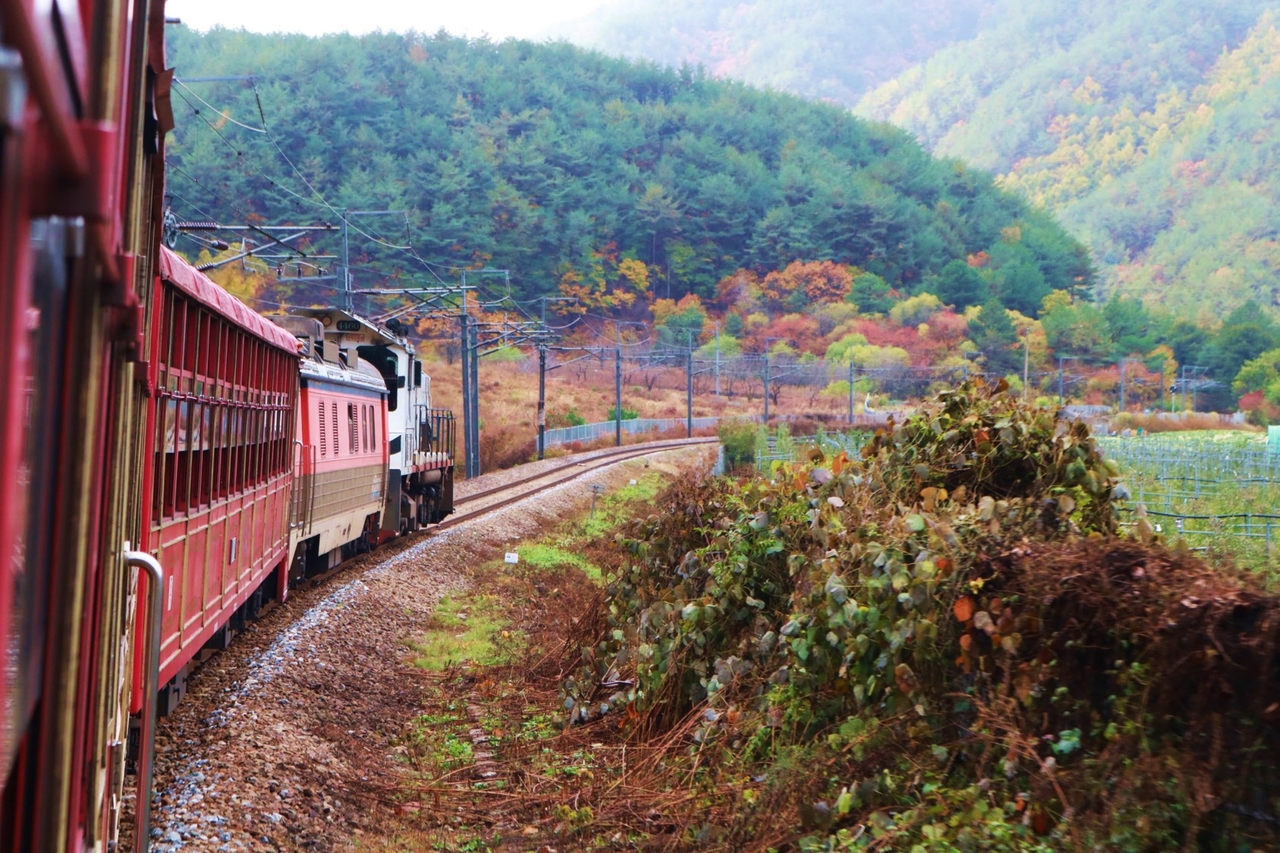
Besides tourism, these trains on the railway provide a lifeline to the villages near Yangwon and Seungbu stations in Bonghwa-gun, North Gyeongsang Province,m which are barely accessible to cars due to a lack of roads.
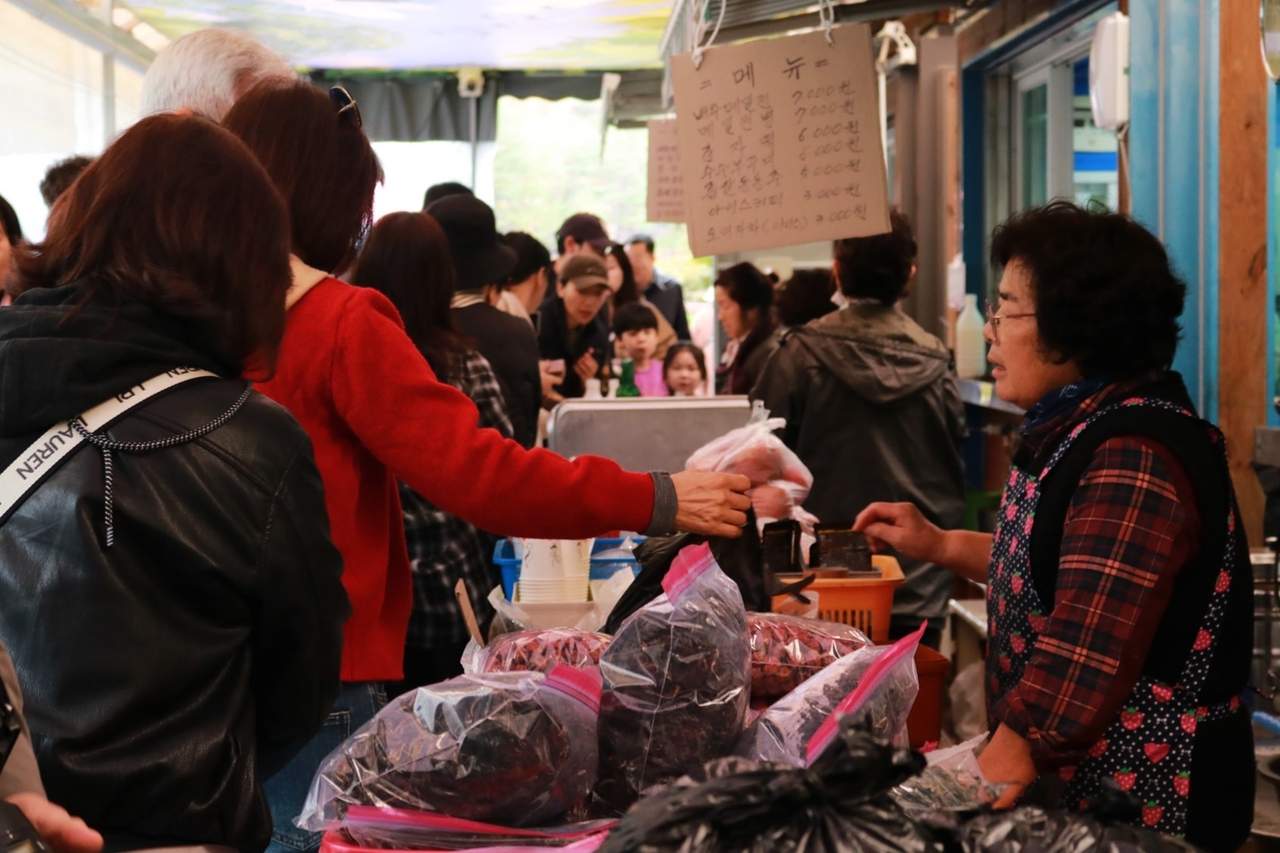
Yangwon station is known for having the smallest station building in South Korean. On the other hand, a stop at Seungbu station offers passengers a 15-minute break — a chance to stock up on buckwheat snacks and traditional alcohol at the station food stalls.
The last stop, Cheoram, greets travelers with cool air, while surrounded by ridges and the vestiges of what was once a thriving mining town.
The V-train runs a round trip along the full route once a day from Thursday to Monday. An hourlong ride is also separately available between Buncheon and Cheoram.
Those looking for a day trip option may consider arriving early in the morning to Yeongju station ― which is connected to Seoul via the KTX ― and staying in Cheoram for a few hours before returning to Yeongju in the afternoon.
The train, however, has no charging options or restrooms.
Over 61,000 passengers traveled on the V-train from January to September. A single ride for the full route costs 11,700 won ($8.70).
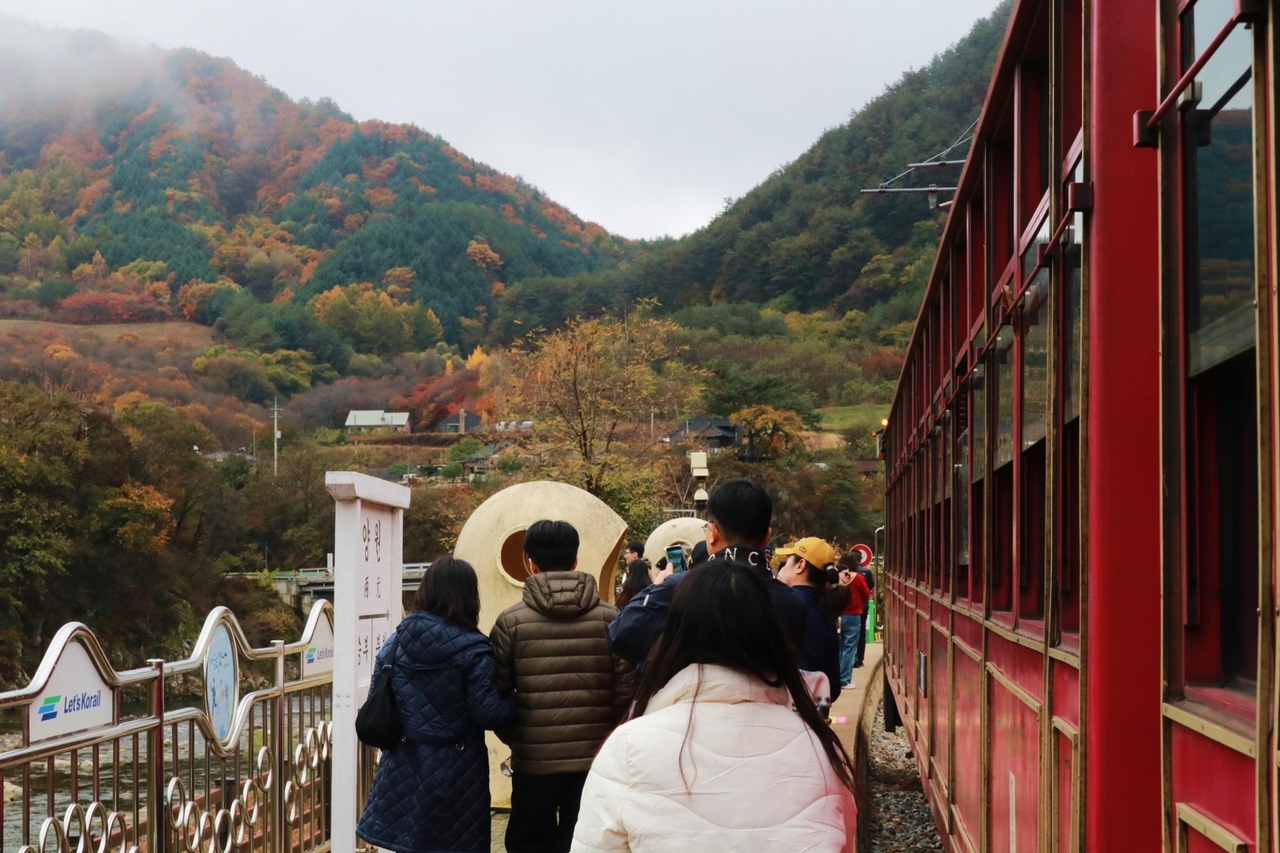
The A-train, also known as Jeongseon Arirang Train, is another slow, diesel-powered ride through the heart of the Baekdudaegan mountain chain.
The 2 1/2-hour ride is linked to the KTX via Jecheon Station in North Chungcheong Province, where it starts.
The last stop is Auraji Station in Jeongseon-gun, Gangwon Province, with several nearby restaurants serving local dishes made of buckwheat and wild mountain herbs. More active visitors can try bikes, zip lines and ropeways here.
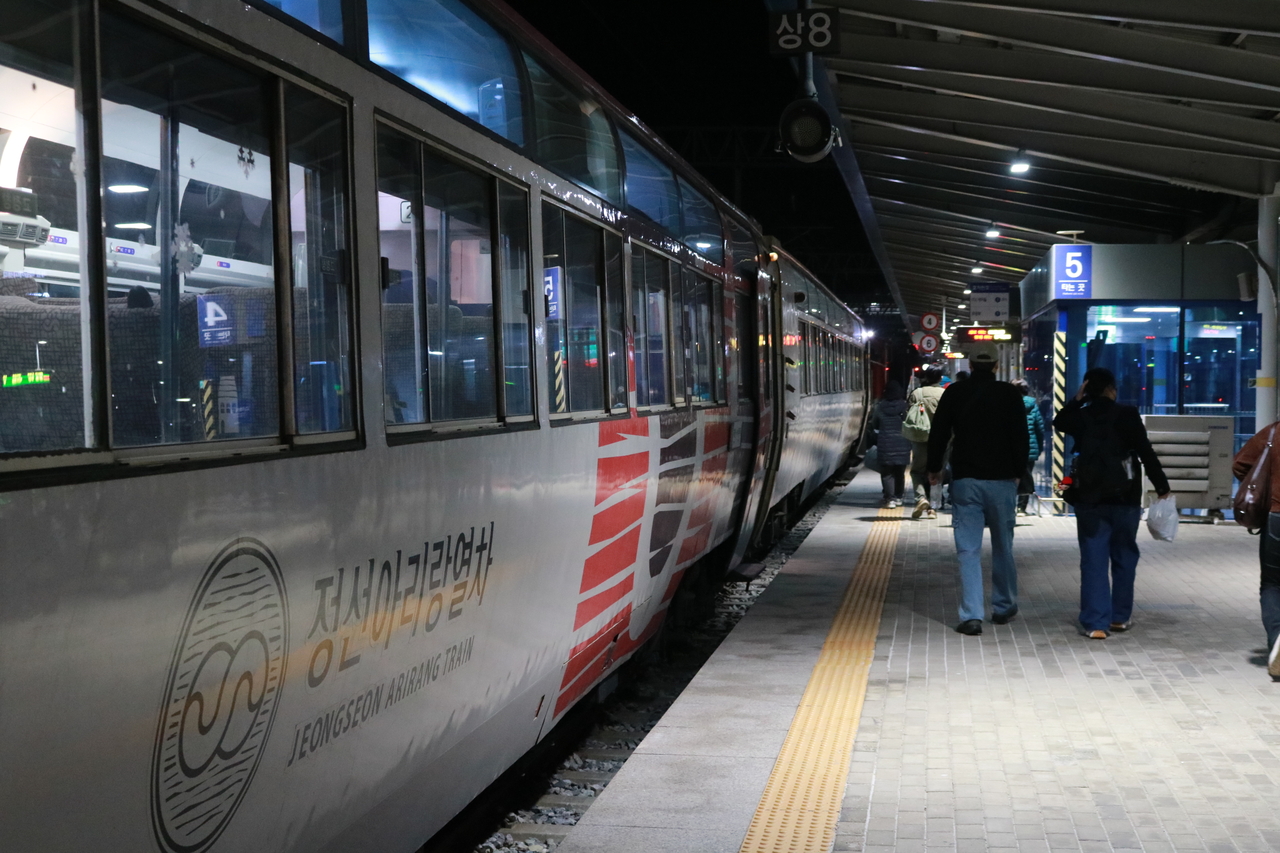
Since its resumption in May after a two-year pause, the A-train has taken some 18,300 passengers. The train offers a round trip once a day on weekends and on every fifth day, on dates when Jeongseon’s traditional "fifth-day" market opens.
The A-train is also bicycle-friendly, with storage inside a cabin for cyclists. The full 100-kilometer trip costs 10,200 won.
Ocean views, ondol seating
There are three other sightseeing trains, the East Santa Train, G-train and S-train, which welcomed a total of 350,000 passengers from January to September this year.
The G-train, or West Sea Golden Train that meanders through the western coastline, has a special cabin with ondol seating, where passengers shake off their shoes and enjoy traditional underfloor heating.
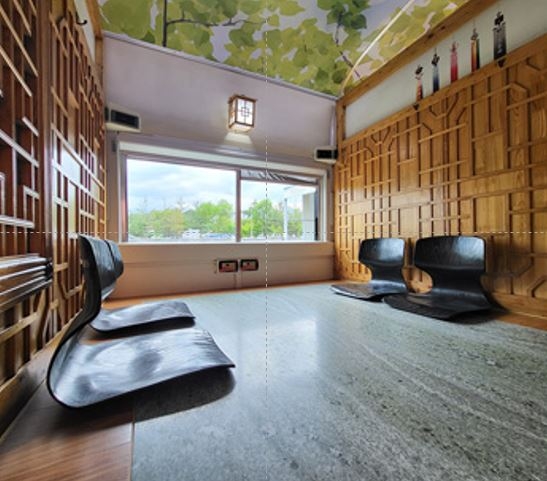
The G-train runs along a twisting 250 kilometer route down the western coastline, from Yongsan Station in Seoul to Iksan Station in North Jeolla Province. The ride takes 3 1/2 hours but those short on time can take a KTX back that completes the journey in an hour and a half.
The S-train runs along two routes across the south of the Korean Peninsula, has bicycle storage and cabins with retro-themed decor.
One route runs from Busan to Mokpo in Jeonnam-Gwangju. The other runs from Seoul to Yeosu, Jeonnam-Gwangju. Both take about 4 1/2 hours. The latter route can also be taken using the KTX in as little as three hours, but with fewer stops and less time to take in the surroundings.
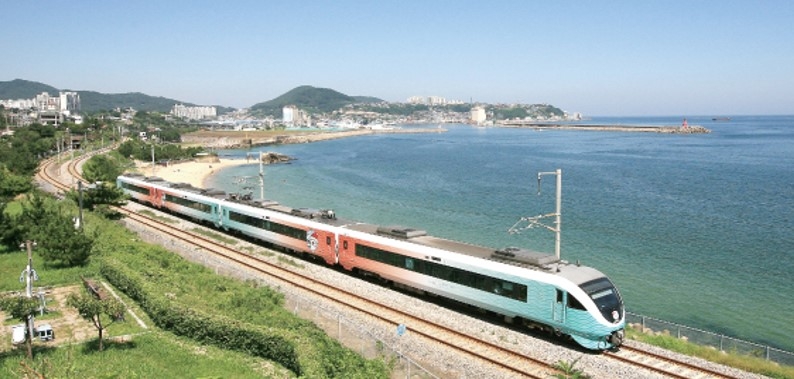
Running through Gangwon Province from Gangneung to Buncheon, the East Sea and Santa Village Train's four-hour, 192-kilometer route lets passengers soak in not just mountain scenery, but ocean views.
It has various seating options such as family seating, table seating and seats facing outward, with KTX connections to Seoul at Gangneung.
consnow@heraldcorp.com